
 aman.upadhyayfast@gmail.com
Introduction
Fire is one of the most devastating emergencies that can occur at any place and at any time. Whether it’s a home, office, warehouse, school, or hospital—no place is completely safe from the risk of fire. The best way to ensure early detection and timely response is by installing a reliable fire alarm system.
In this detailed post, we’ll walk you through everything you need to know about fire alarm systems — from what they are, how they work, their types, components, installation tips, and why they are essential for every building

🔍What is a Fire Alarm System?
A Fire Alarm System is a safety device designed to detect smoke, heat, or fire, and alert people in the building through audible (sirens) and visual (flashing lights) alarms. These systems are installed in residential, commercial, and industrial settings to warn occupants of fire so they can evacuate safely.
The system typically includes:
- Smoke and heat detectors
- Manual call points
- Alarm sounders
- Control panel
- Fire control modules
How Does a Fire Alarm System Work?
A fire alarm system works in three basic stages:
1. Detection
Fire alarm systems detect fire through:
- Smoke Detectors: Sense smoke particles in the air.
- Heat Detectors: Detect rise in temperature.
- Flame Detectors: Detect UV or IR rays emitted by flames.
2. Alert
Once a fire is detected, the system triggers:
- Audible alarms (sirens or buzzers)
- Visual alarms (flashing lights or strobes)
- Voice announcements (in advanced systems)
3. Action
The alert gives occupants time to:
- Evacuate the building
- Call the fire department
- Activate fire suppression systems like sprinklers (if integrated)
Main Components of a Fire Alarm System
Control Panel
The brain of the system. It monitors all devices, sends alerts, and records events.
Smoke Detectors
Detect smoke particles. Can be ionization or photoelectric type.
Heat Detectors
Detect rise in temperature. Suitable for kitchens, garages, or industrial areas.
Manual Call Points (MCPs)
Red-colored devices on walls that people can press to trigger the alarm manually.
Sounders and Strobes
Alert occupants with loud sounds and flashing lights.
Power Supply
Includes main AC supply and backup battery to ensure the system runs during power cuts.
Fire Alarm Cables
Connect all devices in the system. Use only fire-rated cables.
Repeater Panels
Additional panels placed on other floors for accessibility.
Types of Fire Alarm Systems
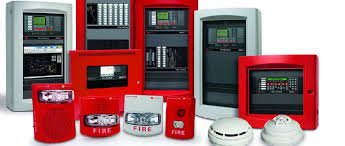
- Conventional Fire Alarm System
- Suitable for small buildings.
- Divides building into zones.
- Alarm shows which zone the fire is in but not the exact location.
- Addressable Fire Alarm System
- Each device has a unique address.
- Provides exact location of the device in alarm.
- Ideal for large buildings, hospitals, and hotels.
- Wireless Fire Alarm System
- No wiring required between devices.
- Easy to install.
- More expensive but suitable for heritage or temporary structures.
- Hybrid Fire Alarm System
- Combination of wired and wireless devices.
- Offers flexibility.
Where Should Fire Alarm Systems Be Installed?
Here are recommended areas for installation:
- Bedrooms and Living Areas (in homes)
- Kitchens (use heat detectors instead of smoke)
- Offices and Meeting Rooms
- Server Rooms
- Basements and Storerooms
- Escape Routes and Staircases
- Warehouses and Factories
- Parking Lots and Garages
Fire Alarm System Installation Tips
Always get the system installed by certified fire safety professionals.
Ensure fire-rated cables and proper conduit fittings.
Install detectors at the correct height and in clean, dust-free areas.
Do not install smoke detectors near fans or air vents.
Use separate zones for each floor or department.
Always provide backup power supply (battery).
Perform monthly testing and annual maintenance.
Fire Alarm System and Indian Regulations
According to the National Building Code (NBC) of India, fire alarm systems are mandatory for:
- High-rise buildings
- Educational institutions
- Hospitals and hotels
- Assembly buildings like theaters or malls
- Industrial premises
Many municipal corporations also require a valid Fire NOC (No Objection Certificate), which includes a functional fire alarm system.
Benefits of a Fire Alarm System
- Early Detection = More Time to Escape
- Reduces Risk of Fatalities
- Minimizes Property Damage
- Complies with Government Safety Norms
- Increases Value and Trust in the Property
- Can Be Integrated with Sprinklers, CCTV, or Access Control Systems
- 24/7 Protection – Even When No One Is Around
⚠️ Common Mistakes to Avoid
Not testing the system regularly
Ignoring battery replacement
Installing detectors in wrong locations
Not training staff on how to use or respond to alarms
Overlooking regular maintenance
Maintenance and AMC (Annual Maintenance Contract)
Fire alarm systems need regular maintenance to function properly. Through an AMC (Annual Maintenance Contract), businesses can ensure:
- Monthly testing of the system
- Battery and wiring checks
- Device calibration
- Emergency repair support
As a fire safety service provider, you can offer customized AMC plans based on the size and type of the building.
Why Every Building Needs a Fire Alarm System?
Imagine this: A small fire starts at night in a warehouse due to an electrical short circuit. Without a fire alarm system, it could go unnoticed until it turns into a massive fire. But with a fire alarm, the system will detect it within seconds and alert the staff or security. This timely detection can save lives, property, and prevent financial loss.
Fire alarm systems are not an expense—they are an investment in safety.
Need a Fire Alarm System for Your Home or Business?
At Asha Fire and Safety, we specialize in supplying, installing, and maintaining fire alarm systems across all sectors — residential, commercial, and industrial. Our solutions are fully compliant with government norms, and our experts guide you from site inspection to installation and AMC.
✅ ISI & BIS Certified Products
✅ Skilled Technicians
✅ Competitive Pricing
✅ Custom AMC Plans
✅ Fire NOC Assistance
📲 Contact us today for a free site visit and quotation. (fire@ashafires.com)
Conclusion
A fire alarm system is the first line of defense in fire safety. Whether you’re a homeowner, business owner, or builder, investing in a quality system can help you meet safety regulations, avoid huge losses, and most importantly — save lives.
If you found this article helpful, feel free to share it or get in touch with Arefyx for professional guidance. g
